


PM
Shockingly good 96 kHz/FPGA engine in a budget footprint
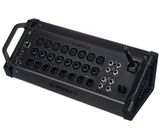
Got my hands on the Allen & Heath CQ20B recently and, from a technical standpoint, this thing is way more serious than it looks. The 96 kHz processing plus A&H’s FPGA architecture gives it a level of transient accuracy you don’t normally see in this price bracket. The stereo image is cleaner, and the low end doesn’t smear the way it tends to on mixers running cheaper DSP pipelines.
I’ve used the Ui24R and X18R a ton. Both are solid in terms of workflow and features, but the CQ’s internal engine is noticeably higher fidelity. The headroom feels better, the preamp noise floor is lower, and the summing stage doesn’t collapse when you start stacking channels with FX. Basically, it “behaves” more like a Lite version of an SQ/Qu system than a budget stagebox.
The multitrack side is also legit: 24 channels to SD card without choking, as long as you use a normal card. Big modern SDXC cards can be picky, but a standard 32 GB SDHC gives you 3–4 hours at full track count, so it’s totally practical for live capture. And if you want clean stems straight into a DAW, it doubles as a 24×24 USB interface with low round-trip latency.
Internal FX are surprisingly usable too — the reverbs don’t have that plasticky “early reflections soup” you get on cheaper digital mixers, and the comps behave predictably even when pushed. FPGA helps here: less aliasing, faster envelope tracking, and no weird zipper noise on fast attacks.
Remote control is stable (iPad/Android), musicians connect instantly, and the monitor workflow is idiot-proof. Gain Assistant is actually well-tuned; it isn’t one of those gimmicks that overreact and wreck your gain structure.
I’ve used the Ui24R and X18R a ton. Both are solid in terms of workflow and features, but the CQ’s internal engine is noticeably higher fidelity. The headroom feels better, the preamp noise floor is lower, and the summing stage doesn’t collapse when you start stacking channels with FX. Basically, it “behaves” more like a Lite version of an SQ/Qu system than a budget stagebox.
The multitrack side is also legit: 24 channels to SD card without choking, as long as you use a normal card. Big modern SDXC cards can be picky, but a standard 32 GB SDHC gives you 3–4 hours at full track count, so it’s totally practical for live capture. And if you want clean stems straight into a DAW, it doubles as a 24×24 USB interface with low round-trip latency.
Internal FX are surprisingly usable too — the reverbs don’t have that plasticky “early reflections soup” you get on cheaper digital mixers, and the comps behave predictably even when pushed. FPGA helps here: less aliasing, faster envelope tracking, and no weird zipper noise on fast attacks.
Remote control is stable (iPad/Android), musicians connect instantly, and the monitor workflow is idiot-proof. Gain Assistant is actually well-tuned; it isn’t one of those gimmicks that overreact and wreck your gain structure.
1
0
Zgłoś nadużycie