


G
Finally they did it!
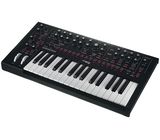
Since 2019 I’ve been using the Moog Sub 37 in my live performances and a lot in the studio as well. It’s an incredible machine for inspiration, discovering new sounds, and saving them easily (sorry, Eurorack fans). And of course on stage it sounds absolutely uncompromising.
The only issue for me has always been the weight when traveling. When I’m driving it’s not such a big deal, but when flying the case with it becomes insanely heavy. So I’ve been waiting for something lighter without compromising the sound — and finally it’s here.
Pros: weight, size, simplicity, build quality, price, and of course the sound!
These FM modulators sound amazing (this is actually one of the new features). It feels like they breathed new life into the classic Moog sound. I expected a light synth that would simply sound like a Moog — instead I got a whole new wave of impressions and inspiration. And if needed, it can still sound like my old Moog.
Cons (not critical for me, but you should know):
1. No screen.
This doesn’t affect playing or saving presets at all, but if you want to tune the oscillator or do some deeper settings, you’ll have to look up the manual online to see how it’s done. I found it and did it — worked perfectly on the first try.
2. LFO 2 has only one waveform.
I suspect they might add more in future firmware updates.
3. Non-standard power cable.
It uses a power adapter (like the Korg Minilogue or something similar). If you tend to lose things, a regular amp power cable won’t save you here.
4. You can’t set an exact tempo on the instrument.
You have to sync it with a drum machine or a computer. I’ve already made peace with this classic Moog “feature.”
To sum up: it exceeded my expectations. I definitely recommend getting one.
The only issue for me has always been the weight when traveling. When I’m driving it’s not such a big deal, but when flying the case with it becomes insanely heavy. So I’ve been waiting for something lighter without compromising the sound — and finally it’s here.
Pros: weight, size, simplicity, build quality, price, and of course the sound!
These FM modulators sound amazing (this is actually one of the new features). It feels like they breathed new life into the classic Moog sound. I expected a light synth that would simply sound like a Moog — instead I got a whole new wave of impressions and inspiration. And if needed, it can still sound like my old Moog.
Cons (not critical for me, but you should know):
1. No screen.
This doesn’t affect playing or saving presets at all, but if you want to tune the oscillator or do some deeper settings, you’ll have to look up the manual online to see how it’s done. I found it and did it — worked perfectly on the first try.
2. LFO 2 has only one waveform.
I suspect they might add more in future firmware updates.
3. Non-standard power cable.
It uses a power adapter (like the Korg Minilogue or something similar). If you tend to lose things, a regular amp power cable won’t save you here.
4. You can’t set an exact tempo on the instrument.
You have to sync it with a drum machine or a computer. I’ve already made peace with this classic Moog “feature.”
To sum up: it exceeded my expectations. I definitely recommend getting one.
4
0
Zgłoś nadużycie
W
Messenger
Sounds good, has great mod wheel,
Good sequencer, preset memory,
The Panel button that resets sound to what is dialled in with knobs.
Bought as supplement to ASM Hydrasynth, chosen over BassStation II due to semi-weighted keys / playability and also Moog brand.
Since it is a mono synth sometimes I end up abruptly ending a note by lightly touching other key - which can be irritating. Does not happen when playing legato or staccato.
For patch design or sound design explorations I strongly prefer Hydrasynth. For Bass sounds, and acid-like sequneces - Moog shines. Also for hands-on explorations using the knobs - no menu diving is brilliant.
Would not recommend mono-synth like Messenger as first hardware synth - you wanna play lush chord once in a while.
Good sequencer, preset memory,
The Panel button that resets sound to what is dialled in with knobs.
Bought as supplement to ASM Hydrasynth, chosen over BassStation II due to semi-weighted keys / playability and also Moog brand.
Since it is a mono synth sometimes I end up abruptly ending a note by lightly touching other key - which can be irritating. Does not happen when playing legato or staccato.
For patch design or sound design explorations I strongly prefer Hydrasynth. For Bass sounds, and acid-like sequneces - Moog shines. Also for hands-on explorations using the knobs - no menu diving is brilliant.
Would not recommend mono-synth like Messenger as first hardware synth - you wanna play lush chord once in a while.
2
0
Zgłoś nadużycie
MF
It's a moog.
Don't know first thing about keyboards, but as a bass player with +20 years of experience I heard them all. This one sounds like a moog, has some cool modern-ish functions and is small and way cheaper than the usuall moog suspects.
Can't say much about the playing part since this is my first synth ever, but it's built very nice, the control layout is easy to understand (for a device that has noticeably more knobs than a p-bass) and sound possibilities while very vast are easy to understand and actually sculpt.
For a bass player this one seems like a no-brainer.
Can't say much about the playing part since this is my first synth ever, but it's built very nice, the control layout is easy to understand (for a device that has noticeably more knobs than a p-bass) and sound possibilities while very vast are easy to understand and actually sculpt.
For a bass player this one seems like a no-brainer.
1
0
Zgłoś nadużycie
K
Messenger is my sixth synth, I have the latest firmware, but I'm must say it still needs some work from Moog team. Has issues with syncing to midi clock, at the current state it's almost unusable on the stage. Not sure why Moog decided to feature it with USB C interface, when most synths use USB B, which is more affordable and you can easily find longer cables around. Overall sound quality is very good, but still limited on synthesis capabilities, yet for this price it is a great entry-level Moog synth.
0
1
Zgłoś nadużycie