




F
Very handy idea,and fun, but not ready yet.
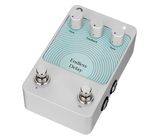
This feels like an interesting prototype of a concept that could eventually become an essential feature in modern hardware design. The idea behind the Polyend Endless is genuinely forward-thinking, and I can easily imagine a future where this kind of integrated programmable DSP environment becomes standard across performance gear.
That said, the current implementation feels far from mature. The biggest issue, in my opinion, is that both the sound quality and the feature set fall short when it comes to real-world performance use. Even the factory-installed delay algorithm doesn’t feel entirely reliable or polished. Most of the patches and experiments I tried afterwards were unfortunately quite underwhelming from a sonic and practical standpoint.
I hesitated several times before writing this review because I genuinely like Polyend as a company. I own both the Polyend Step and the Polyend Mess, and I think they are outstanding pieces of gear that easily compete above their price range and, in some areas, outperform much of the competition. Unfortunately, I can’t say the same about the Endless.
Right now, the Endless feels incomplete ,almost like an early developer platform or a public beta rather than a finished performance tool. It desperately needs further firmware development, refinement, or perhaps even a proper MKII revision. At its current stage, it feels raw and not fully ready for professional live use.
Personally, I wouldn’t rely on it for a gig or any critical performance situation. Where it does shine is as an experimental platform for people interested in DSP programming, prototyping, and creative coding in C++. In that context, it can actually be a lot of fun and potentially very inspiring. But as a reliable live effects machine, it still has a long way to go.
That said, the current implementation feels far from mature. The biggest issue, in my opinion, is that both the sound quality and the feature set fall short when it comes to real-world performance use. Even the factory-installed delay algorithm doesn’t feel entirely reliable or polished. Most of the patches and experiments I tried afterwards were unfortunately quite underwhelming from a sonic and practical standpoint.
I hesitated several times before writing this review because I genuinely like Polyend as a company. I own both the Polyend Step and the Polyend Mess, and I think they are outstanding pieces of gear that easily compete above their price range and, in some areas, outperform much of the competition. Unfortunately, I can’t say the same about the Endless.
Right now, the Endless feels incomplete ,almost like an early developer platform or a public beta rather than a finished performance tool. It desperately needs further firmware development, refinement, or perhaps even a proper MKII revision. At its current stage, it feels raw and not fully ready for professional live use.
Personally, I wouldn’t rely on it for a gig or any critical performance situation. Where it does shine is as an experimental platform for people interested in DSP programming, prototyping, and creative coding in C++. In that context, it can actually be a lot of fun and potentially very inspiring. But as a reliable live effects machine, it still has a long way to go.
3
0
Zgłoś nadużycie
AF
That deserves respect
The quality seems quite good to me. I really like how convenient it is that I can simply say “make a tone like the guitarist from a certain band” and voilà — it’s instantly ready. That’s genuinely awesome!
The website and instructions are a bit confusing though. For example, it’s not obvious at all where to download presets made by other users. The Playground section could definitely be placed somewhere more intuitive and easier to find.
— ОТВЕТ ЗАКОНЧЕН —
The website and instructions are a bit confusing though. For example, it’s not obvious at all where to download presets made by other users. The Playground section could definitely be placed somewhere more intuitive and easier to find.
— ОТВЕТ ЗАКОНЧЕН —
1
0
Zgłoś nadużycie