



Do treści strony
Antelope Cosmos bezpłatnie przez 6 miesięcy

Antelope Cosmos bezpłatnie przez 6 miesięcy

Do dnia 15.01.2026 r. włącznie, przy zakupie jednego z objętych promocją produktów Antelope Cosmos z dostępem do ponad 75 efektów przez 6 miesięcy o wartości 74,50 EUR otrzymasz bezpłatnie.

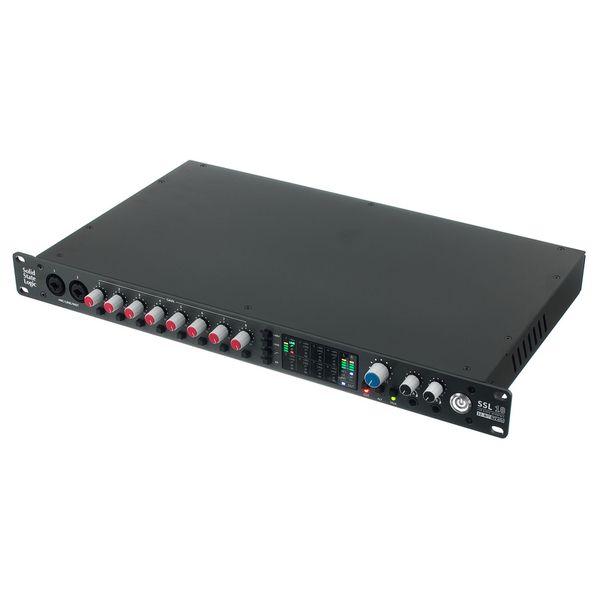
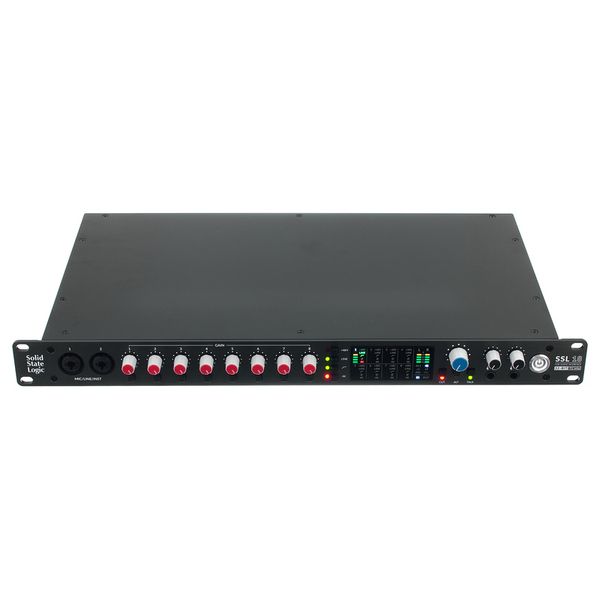
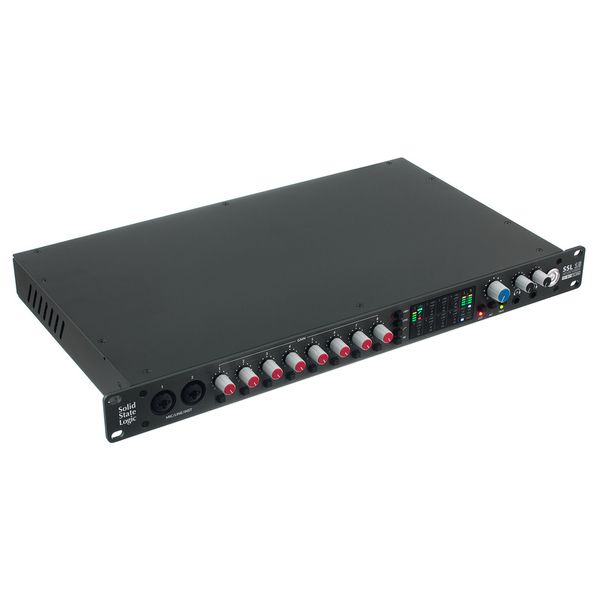
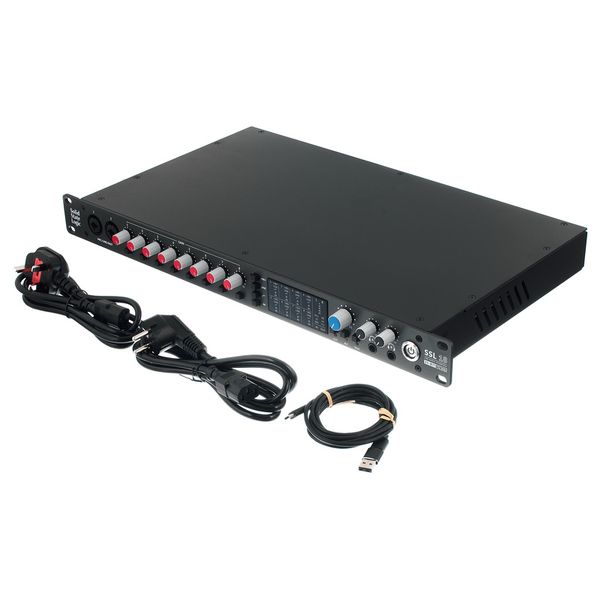
Interfejs audio USB 26 In / 28 Out

  • 32 bity / 192 kHz
  • Poziom pracy +24 dBu dla wszystkich wejść i wyjść
  • Dynamic Range 120 dB we wszystkich wejściach i wyjściach słuchawkowych
  • Dynamic Range 125 dB w wyjściach monitorowych i liniowych
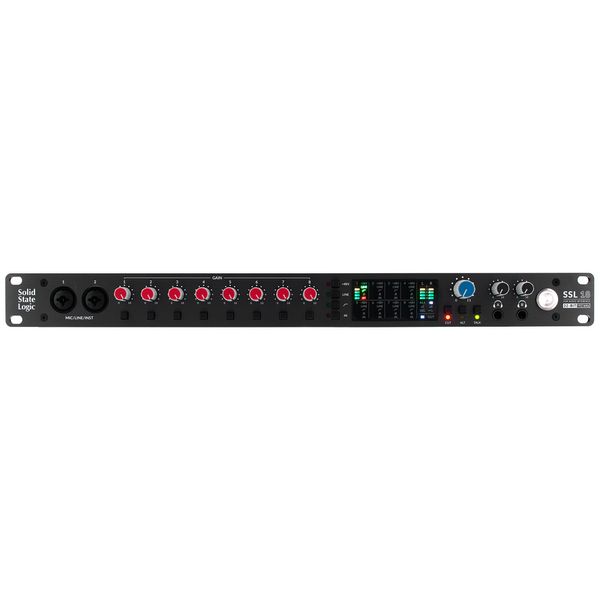
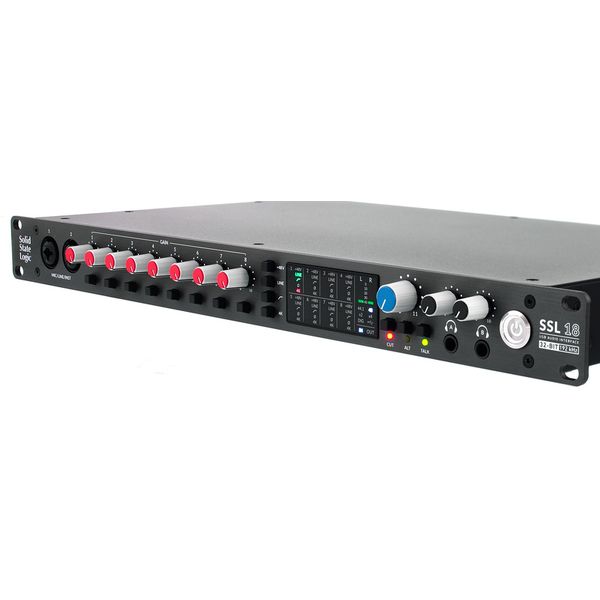
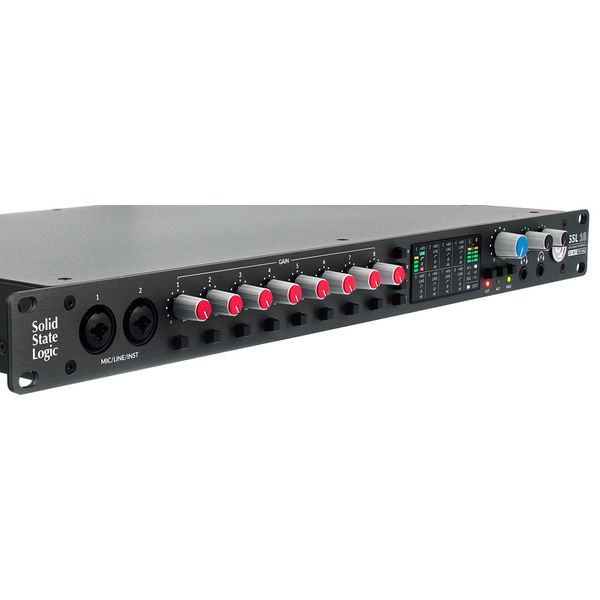
  • 8 przedwzmacniaczy mikrofonowych (Gain Range 67 dB, EIN -130,5 dBu, +48 V, Dynamic Range 120 dB, HPF, przełącznik 4K)
  • Wejścia 1/2 przełączane na poziom instrumentów
  • Wejście Talkback z wbudowanym Listen Mic Compressor (może być również używane jako wejście liniowe dla stemów z LMC)
  • Przełącznik Legacy „4K“ dla barwy dźwięku wzorowanej na serii SSL 4000
  • Stereo Loopback ze źródłem Loopbacku do wyboru
  • W zestawie oprogramowanie SSL Production Pack
  • Sterowanie przez bezpłatną aplikację SSL 360° (w tym SSL18 Low Latency Mixer Tool)
  • Wymiary (sz. x wy. x gł.): 482,6 x 43,6 x 294 mm
  • Waga: 4 kg

Złącza:

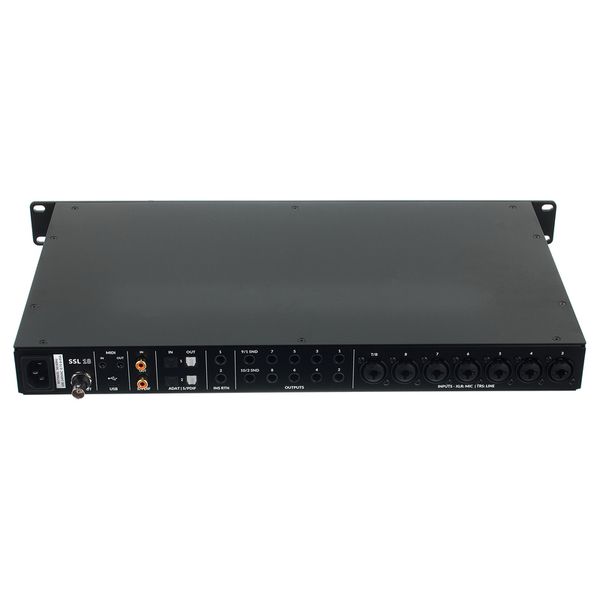
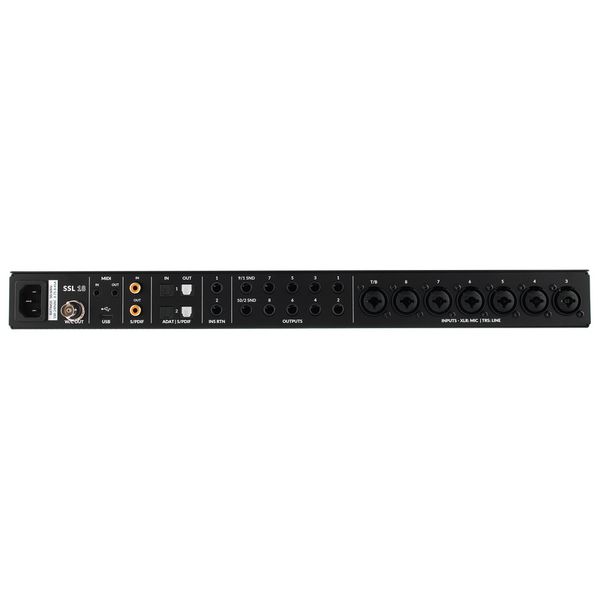
  • Wejścia kombo mikrofonowe / instrumentalne / liniowe: 2 x XLR / wtyczka jack 6,3 mm
  • Wejścia kombo mikrofonowe/liniowe: 8 x XLR / wtyczka jack 6,3 mm
  • Wejście kombo Talkback mikrofonowe: XLR / wtyczka jack 6,3 mm
  • 2 wejścia ADAT 44.1 / 48 kHz (8 kanałów @ 96 kHz)
  • 2 wejścia S / PDIF (koaksjalne lub optyczne)
  • Wejście Wordclock BNC
  • Wejście i wyjście MIDI: wtyczka mini jack TRS-A 3,5 mm
  • Wyjścia liniowe: 10 x symetryczna wtyczka jack 6,3 mm (+9 dBu / +24 dBu opcja dla wyjść 1/2 i 3/4, 9/10 Send)
  • Return: 2 x wtyczka jack 6,3 mm
  • Wyjścia słuchawkowe stereo - regulowane oddzielnie z 3 poziomami impedancji (Standard / High Sensitivity / High Impedance): 2 x wtyczka jack 6,3 mm
  • USB-C
  • Produkt dostępny od Marzec 2025
  • Numer artykułu 609316
  • Jednostka sprzedaży 1 szt.
  • Recording / Playback Channels 26x28
  • Number of Mic Inputs 8
  • Number of Line Inputs 8
  • Instrument Inputs 2
  • Number of Line Outs 10
  • Headphone Outs 2
  • Phantom power Yes
  • Number of S/PDIF Connectors 2
  • Number of ADAT Connectors 2
  • Numer of AES/EBU Connectors 0
  • Number of MADI Connectors 0
  • Ethernet 0
  • Other Connectors USB-C
  • MIDI interface Yes
  • Word Clock 1xIn
  • Max. sample rate (kHz) 192 kHz
  • Max. resolution in bit 32 bit
  • USB Bus-Powered No
  • Incl. power supply Yes
  • USB Version 2.0
  • Width in mm 482,6 mm
  • Depth in mm 294 mm
  • Height in mm 43,6 mm
  • Connection Format USB port Type C
  • Included in delivery SSL Production Pack Software
  • Zero latency monitoring Yes
Dostępny B-Stock od 3 555 zł
3 799 zł
Ceny z podatkiem VAT
Dostępny w magazynie
1
109
Odwiedzający
przyglądają się temu produktowi
22
Ranking sprzedaży
w Interfejsy USB 

13 Oceny klientów

4.7 / 5

obsługa

właściwości

dźwięk

wykończenie

8 Opinie

DN
I am disappointed
Dawid Nowak 07.04.2025
EDIT: I ordered a new piece and it works flawlessly! So the previous experience was due to a faulty device which unfortunately happened to me. I highly recommend SSL18 excellent interface.
Hello, I'm continually having problems with short dropouts with the SSL 18. I'm using it with a MacBook PRO M1. I have tried everything and the problem still occurs. I like the functionality of SSL however these problems are unacceptable.... I think it's time to switch to Audient ID48. I am disappointed.
wykończenie
właściwości
obsługa
dźwięk
9
18
Zgłoś nadużycie

Zgłoś nadużycie

google translate gb
Wystąpił błąd. Proszę spróbować później.
V
Great device, many gimmicks
Votanik 03.05.2025
I'm writing this review after a month of use. I purchased the SSL 18 to record rehearsals, replacing my twenty-year-old interface.

The difference is literally day and night. With the SSL, each instrument's frequencies are distinct, positioning in the mix is clear, transients are amazing, and the sound is incredibly clean in both playback and recording. At reasonable gain settings, noise is practically nonexistent.

That said, the SSL 18's clarity might be perceived (or actually be) somewhat sterile. I've worked with similarly clean interfaces like the RME ADI2 Pro FS, which offers both clarity and exceptional detail. (Note that I recognize the difficulty in describing sound quality, so please bear with me.)

Another interface I'm experienced with and would like to compare is the Prism Sound Lyra 2. If a Studer tape machine transformed into an interface, it would become the Lyra. This interface has incredible depth, sweet highs, and amazing bass extension. Between the RME and Lyra 2, the SSL 18 leans toward the RME – its sound is brighter and attempts the RME's analytical quality, which unfortunately (I think) it doesn't quite achieve.

To understand the differences between the SSL 18 and Lyra 2, I set up a stereo pair of KM184 microphones to record identical audio material (music and pink noise). Each interface played back and recorded itself through the microphones, which remained in the same position between recordings.

I expected a bigger difference. Listening to the recordings, I could barely tell whether I was hearing the Lyra 2 or SSL 18. The SSL 18 revealed itself only through slightly emphasized highs; otherwise, everything sounded the same. My conclusion is either I'm biased toward the Lyra 2, or the differences don't translate through microphone recordings. Despite similar results, I'm convinced the Lyra 2 has a more musical and sweet sound than the SSL 18 – though perhaps I'm just imagining it? I think not, you judge.

As a device, the SSL 18 seems well-built. All buttons have the right feel, and except for the potentiometers (which I must use since gain can't be controlled digitally), I generally control everything through the 360 application's control panel.

I'm not impressed with the 4K function and Listen Mic Compressor (LMC) – not because they sound bad, but because I was forced to pay for features I don't need. Both are gimmicks that ultimately burden the buyer. The 4K is just a marketing trick (reminiscent of 4K video's higher resolution) and likely has no relation to SSL 4000 consoles (unless they had permanent 3 dB or so high shelf boost). Even if it did, I don't understand why I'd need to print my tracks with enhanced highs – if I want more treble, I can add it in my DAW with any EQ and harmonic distortion I prefer. Today's plugins are excellent; people should abandon the hype around supposed "analog magic." I find nothing magical about 4K, though it sounds better than Focusrite's harsh "Air" feature (which started this unfortunate gimmick war).

The LMC also sounds good (better than expected), but it's for very specific cases. Again, these effects can be done in-the-box today. These plugins are emulations just like this compressor is an analog emulation of the original – you're not getting the authentic "LMC" circuit anyway.

The good thing about the LMC is that it gives you the Talk Back channel which, despite some limitations and reduced specs compared to the other channels, can be used for normal recording, effectively making it a 9-channel device – which is exactly why I bought it, as I needed exactly 9 channels.

While they give you 4K and LMC, they don't provide a Pad, which is a truly useful feature standard in serious preamps. I'd trade the 4K for a Pad function any day. When the line input trim is at maximum (input sensitivity is highest), there's noticeable noise that I wish was lower.

The 32 bit essentially is meaningless and serves more as marketing rather than something practical.

The 360 application is well-designed and relatively intuitive, unlike Prism's and especially RME's, which require a PhD to understand. Unfortunately, the control panel for buffer size settings is a separate application from 360, which is unfortunate – ideally, these would be unified. You can already set the sample rate in 360; why not include the rest?

Firmware updates are extremely easy, and the drivers are completely stable. Regarding application negatives: 360 always starts on the home page, forcing you to click on the console field every time, which becomes tiresome. The buffer size control seems to have a bug when the size is at maximum (an impressive 8192!) – first time I've seen a driver allow such a large size. I hope these issues will be resolved in future updates.

It's worth noting that the device lacks a Word Clock In, which exists in the Alpha 8. I hope SSL releases an expansion like the Alpha 8 but with SSL 18 preamps, because if someone wants 16 channels and buys the SSL 18 as an expansion, they won't be able to synchronize the devices properly. They'll have to rely on clock integration through digital audio via either ADAT or S/PDIF, which isn't ideal as it creates subtle jitter.

I'd be interested in such 8-channel expansion unit from SSL (I know about the PureDriveOcto, but that's not what I mean) as long as it has Word Clock in.

If this device is released, I might consider it, but this time I won't rush like I did with the SSL 18, which I paid about 60 euros more for than its current price.

Is not about the money, its because I can't help feeling cheated – either Thomann or SSL doesn't support early adopters.
That's bad.
wykończenie
właściwości
obsługa
dźwięk
48
0
Zgłoś nadużycie

Zgłoś nadużycie

google translate de
Wystąpił błąd. Proszę spróbować później.
A
2 Geräte mit Mängel
Akky 03.07.2025
Das erste Gerät hatte lose Teile die im Gerät herum flogen. Beim Auspacken war das direkt zu hören, dass hier etwas nicht stimmt. Ging direkt zurück.
Beim zweiten Gerät war die USB Verbindung nicht stabil, ging auch zurück. Die Abwicklung bei Thomann war wie üblich hervorragend.

Von den Spezifikationen das perfekte Gerät für mich. Qualität jedoch mangelhaft.
wykończenie
właściwości
obsługa
dźwięk
9
10
Zgłoś nadużycie

Zgłoś nadużycie

google translate de
Wystąpił błąd. Proszę spróbować później.
B
Das SSL 18 ist nun das Herzstueck meines kleinen Studios
B.Christa 23.04.2025
Ich finde das SSL 18 ueberzeugt in allen Punkten. Man muss sich natuerlich mit den Routingmoeglichkeiten (SSL 360) beschaeftigen, da schwaches Routing auch zu schwachen Ergebnissen fuehrt. Ich konnte mit dem SSL die bisher besten Audiorecordings meiner Yamaha Recording drums machen, fuer mich ueberzeugend.
wykończenie
właściwości
obsługa
dźwięk
9
0
Zgłoś nadużycie

Zgłoś nadużycie