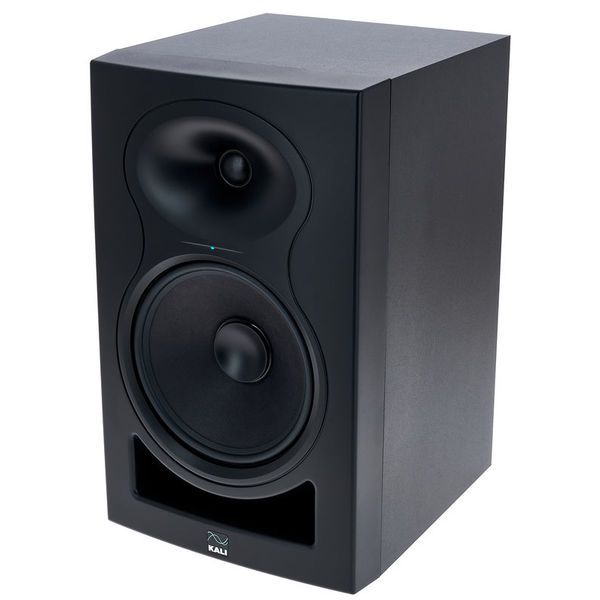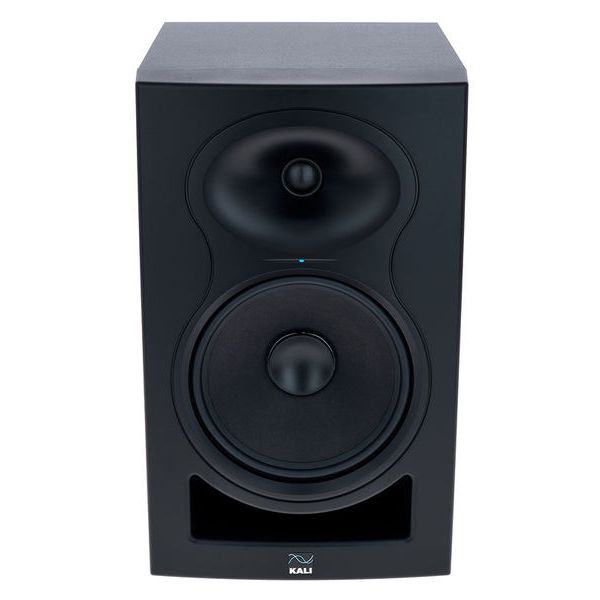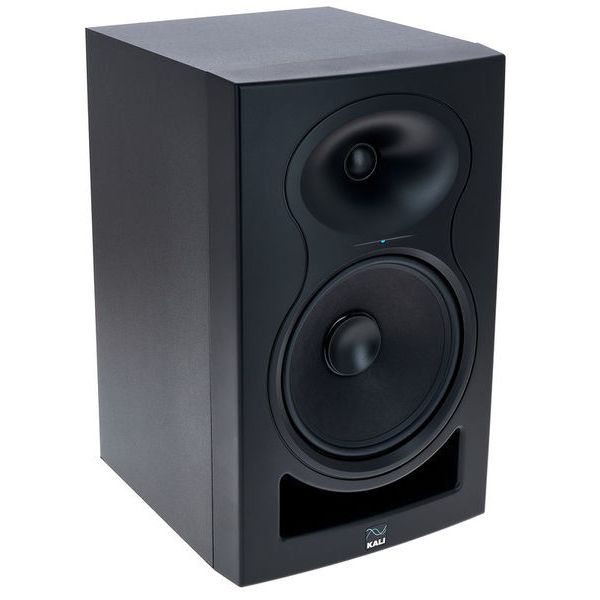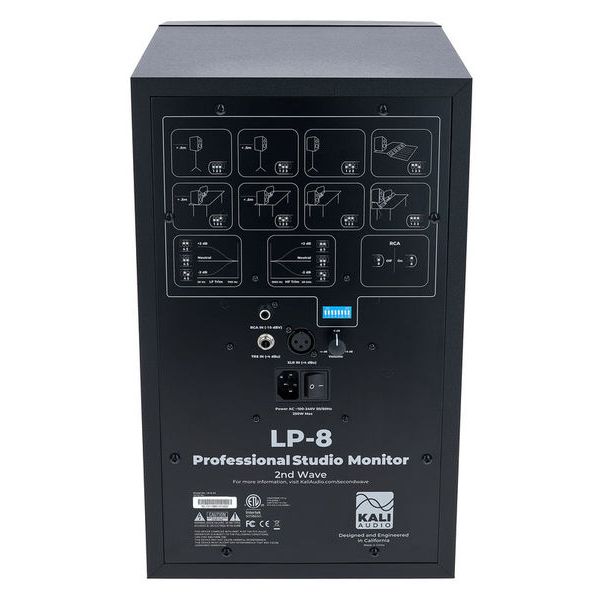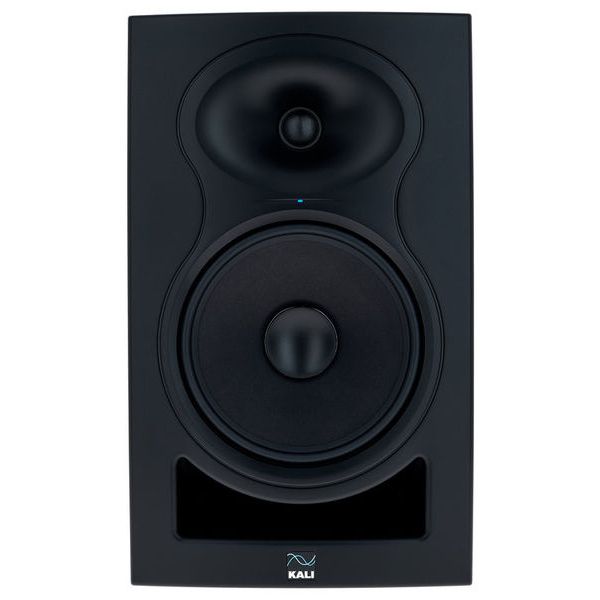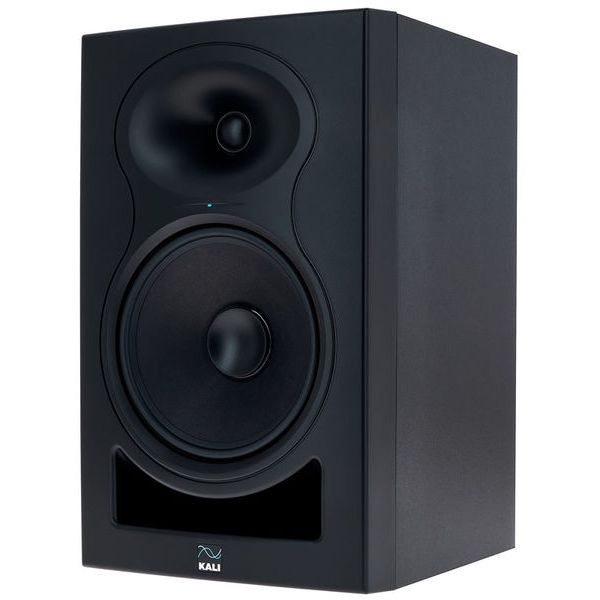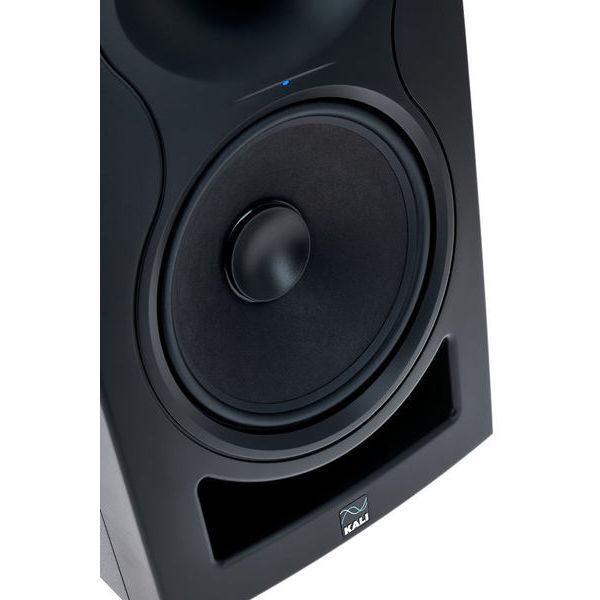


These aren't exciting. They're not going to surprise you the first time you power them up. What they are is relentlessly, almost annoyingly, honest and that's the whole point.
The woofer extends down to roughly 39Hz usable. For a 2-way at this price, that's impressive. Bass is tight, controlled, and unhyped — you hear what's on the track, not bloated low-end flattery designed to make your beats sound bigger than they are. The front-firing port is well-tuned with no chuffing. Bass notes start and stop when they should.
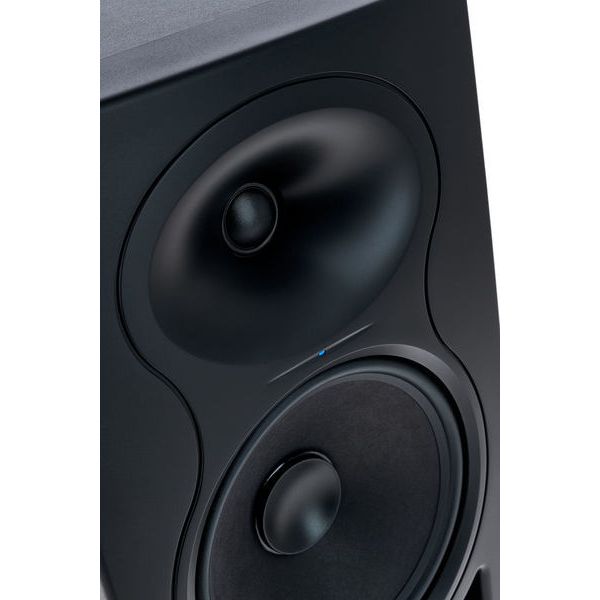
The mid range is where the LP-8 earns its keep. Transparent without being thin, with actual body to it, and it doesn't sound strained when things get dense. Vocals sit naturally. Some reviewers parrot a supposed dip around 700-900Hz but honestly that's become a self-perpetuating talking point more than an audible problem. The 1.8kHz crossover is handled cleanly. The V2's soft dome tweeter is noticeably smoother than the V1 — detailed without being harsh, and you can sit in front of these for hours without ear fatigue. It won't give you the air of a ribbon tweeter, but it doesn't lie about sibilance or cymbal harshness either. Imaging via the wave guide is solid and the sweet spot is wider than expected. Noise floor is basically non-existent — the V2 dropped self-noise by 12dB and these things are dead silent at idle.
Now, comparisons with other monitors I owned (I replaced the LP-8s with a pair of IN-8s since a while back):
vs. Adam T5V: Completely different animals. The T5V has that signature ribbon brightness — a 5" monitor that emphasizes air and detail up top, sometimes at the cost of sounding thin and aggressive. The LP-8 has actual low end, a fuller mid range, and significantly more headroom. The T5V works for casual desk listening, but for real mix decisions, especially anything below 100Hz, the LP-8 is in a different league. Not a fair size comparison, but people cross-shop these constantly so it's worth saying.
vs. Fluid Audio FX80: The FX80's coaxial design gives it a slight edge in imaging coherence with everything from one point source resulting in precise spatial placement. But the trade-off is a somewhat scooped mid range and bass that multiple reviewers have accurately described as slightly sluggish. The LP-8 is tighter and more neutral through the mids, which matters more for mixing than the FX80's imaging party trick. Similar low-end extension on paper, but the LP-8's transient response is faster and the tonal balance less colored.
vs. Genelec 8030: This is where things get uncomfortable for Genelec. The 8030 is a 5" monitor costing significantly more per unit. Build quality is impeccable, the waveguide design is legendary, and the refinement is higher for sure: tighter transients, better controlled directivity, and that "I'll outlive your grandchildren" construction. But it's a 5" driver. The LP-8 gives you substantially more low-end extension, more headroom, and a bigger presentation for a fraction of the price. The 8030 wins on engineering pedigree and long-term serviceability, but on performance-per-euro the LP-8 is embarrassing it.
vs. Kali IN-8 V2: The IN-8 is the LP-8's bigger, smarter sibling. The 3-way design with its coaxial mid/tweeter assembly delivers noticeably better mid range clarity, tighter imaging, and more even off-axis response. The dedicated mid range driver frees the 8" woofer to focus on bass, and you hear the difference, cleaner, more separated, more resolved. The LP-8 is a very good 2-way; the IN-8 is a legitimately great 3-way. If you can afford the step up, take it. If you can't, the LP-8 gets you closer to IN-8 territory than anything else at its price.
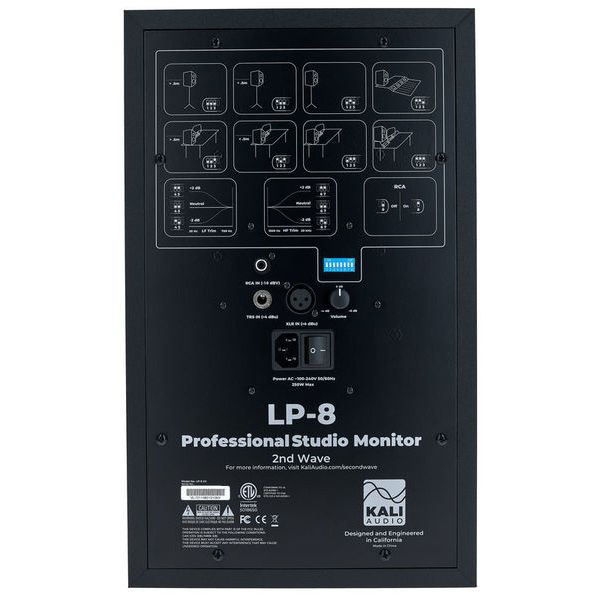
vs. PreSonus Eris E8 XT: The Eris has more raw power and slightly deeper extension on paper. But the character is different: laid-back, almost relaxed. Transients are slower, the mid range sits further back, and while the wide sweet spot is nice, imaging isn't as precise. The LP-8 is the more revealing monitor. The Eris is more forgiving, which is either a feature or a liability depending on what you need. The Eris's continuously variable mid/HF knobs are more flexible than DIP switches, but that flexibility is also a trap for people who'll boost their way into problems.
vs. Eve Audio SC207: Different price class entirely. The SC207's AMT ribbon tweeter is gorgeous, detailed, smooth, with that specific airy quality soft domes can't replicate. But the SC207 is a 6.5" monitor reaching about 44Hz, so the LP-8 extends deeper and plays louder. The Eve is more refined with a more "finished" sound; the LP-8 is more workmanlike but covers more range for substantially less money. The Eve feels more like a vibe/songwriter reference than a mix/mastering one. If you can swing the Eve's price, go for the IN-8 instead, Eve's refinements do not outclass given the cost. If you can't, the LP-8 is the rational choice.
Bottom line: The LP-8 V2 is the monitor you buy when you want the truth without paying a premium for it. It doesn't flatter, doesn't hype, and doesn't pretend your mix is better than it is. For the price, there's nothing I'd recommend over it in the 2-way 8" category. Boring in the best possible way.