Do treści strony

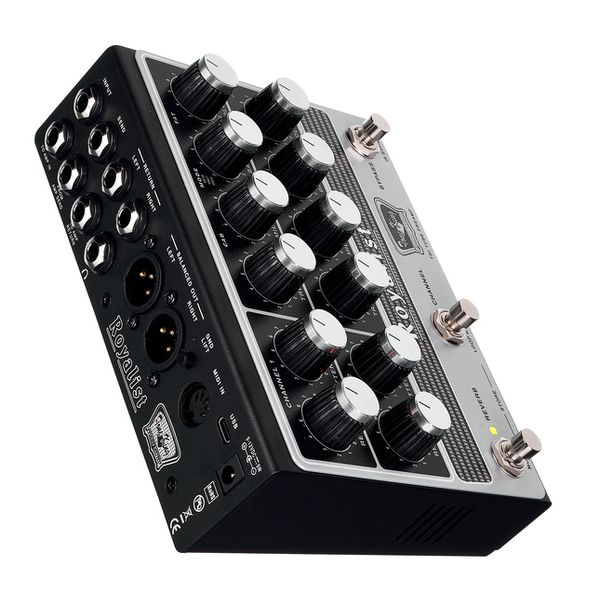
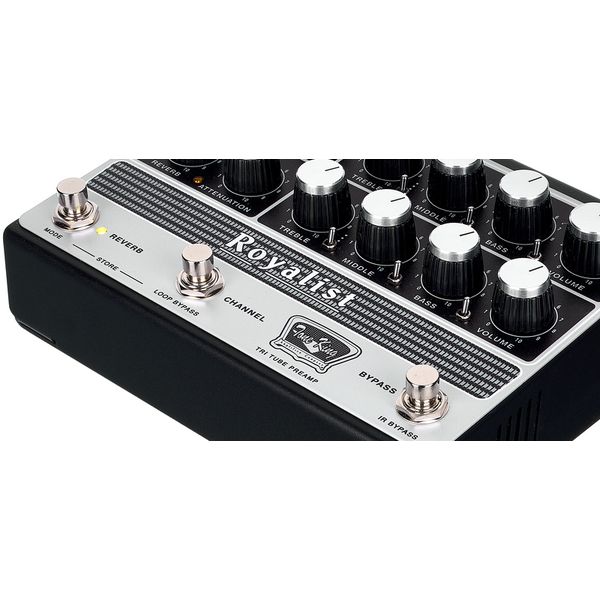
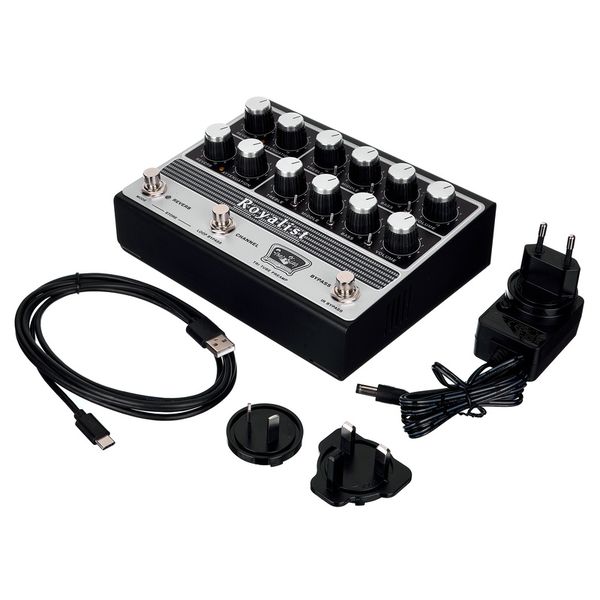
Tone King Royalist MKII Tri-Tube Preamp

4.1 na 5 gwiazdek z 16 ocen klientów ()

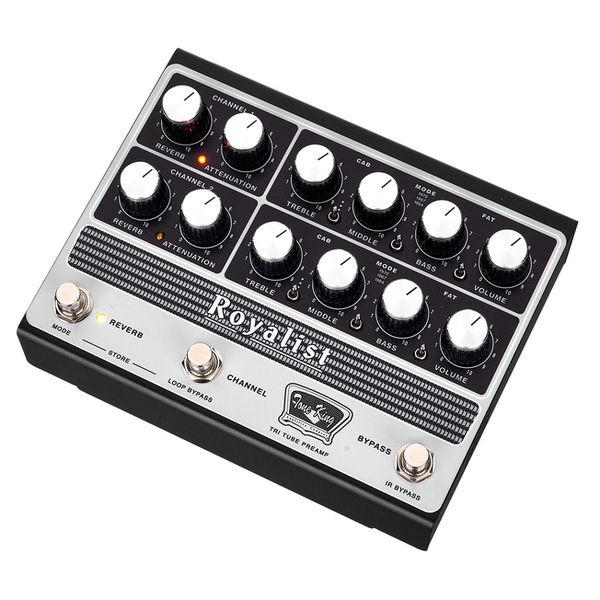
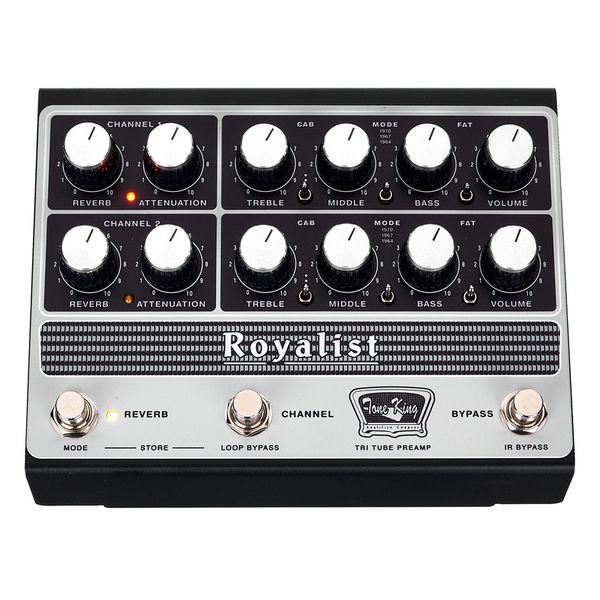
Lampowy przedwzmacniacz w formie pedału do gitary elektrycznej

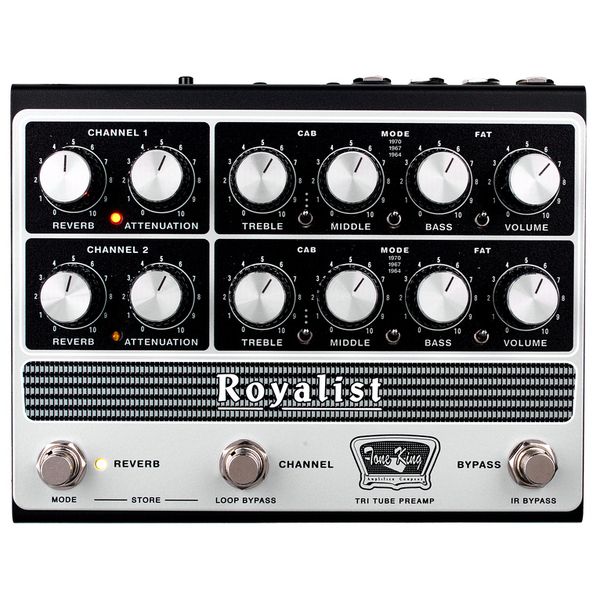
  • 2 niezależne kanały, oba z przełączalnym brytyjskim charakterem brzmienia z lat 1964, 1967 lub 1970, przy czym kanał 1 jest bardziej zestrojony pod lata 60., a kanał 2 pod lata 70.
  • Zero-Watt-Poweramp zapewnia autentyczną dynamikę i reakcję wzmacniacza
  • Wbudowany reverb i tłumienie
  • Symulacja DSP IR kolumny i końcówki mocy jest fabrycznie wyposażona w ekskluzywny zestaw impulsów (IR) OwnHammer i przekazuje brzmienie kolumny oraz mikrofonu w jakości studyjnej do DAW lub miksera
  • Do 128 zapisanych presetów do natychmiastowego wywołania za pomocą zewnętrznego przełącznika MIDI
  • Lampy: 3 x 12AX7
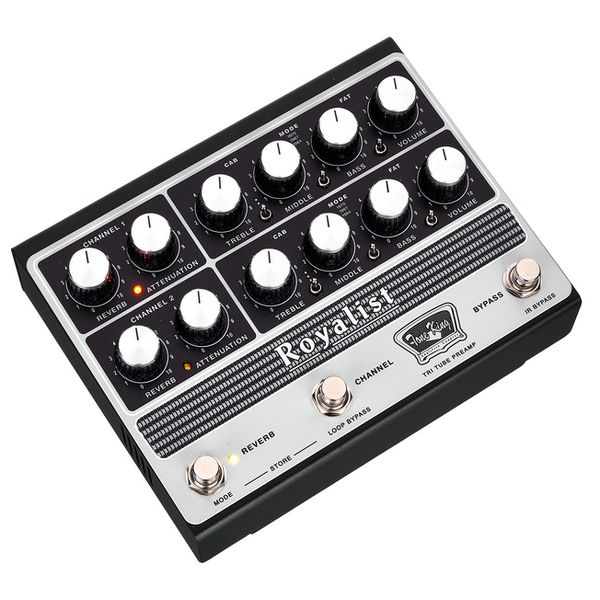
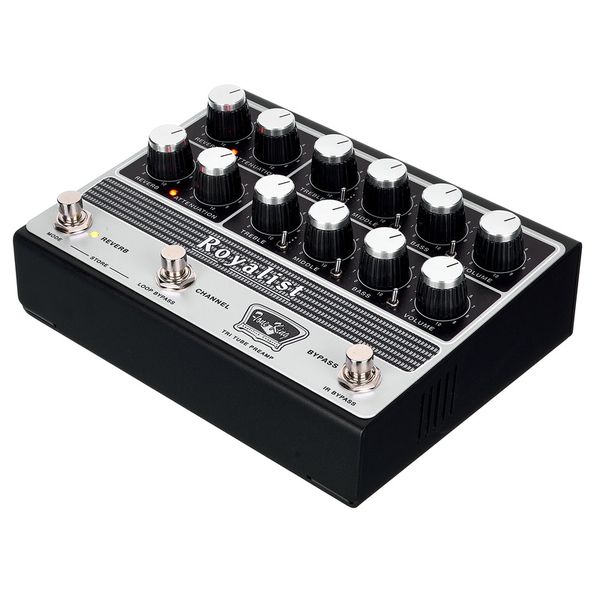
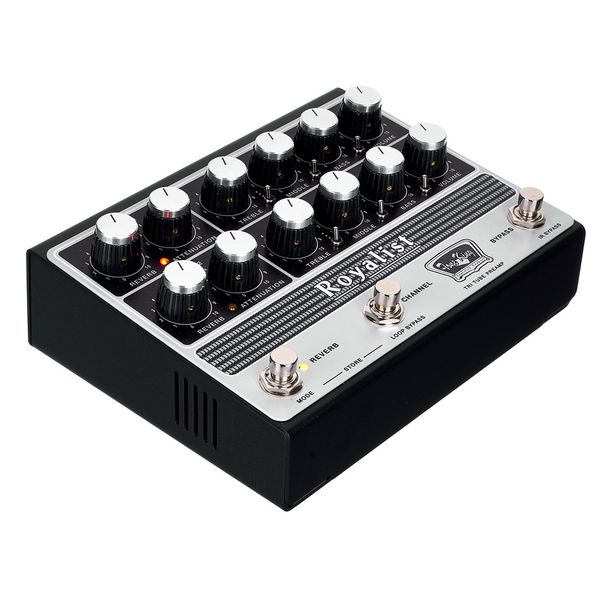
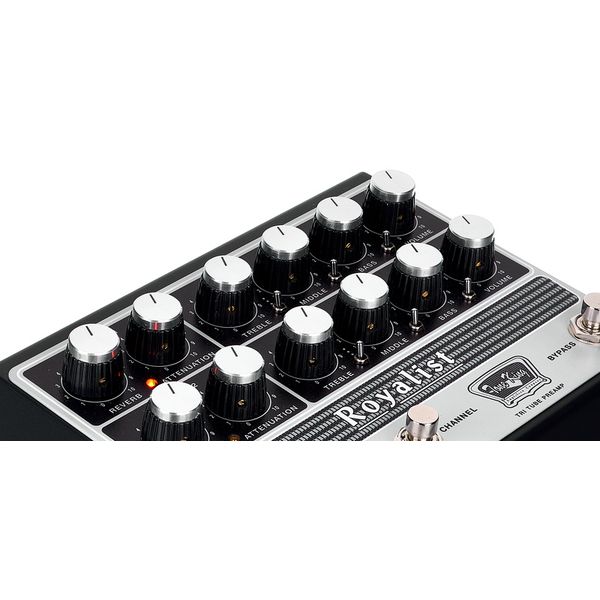
  • Regulacja na kanał: Volume, Bass, Middle, Treble, Attenuation, Reverb
  • Przełączniki na kanale: cab, mode, fat
  • Globalny przełącznik: Ground Lift
  • Efekty: reverb
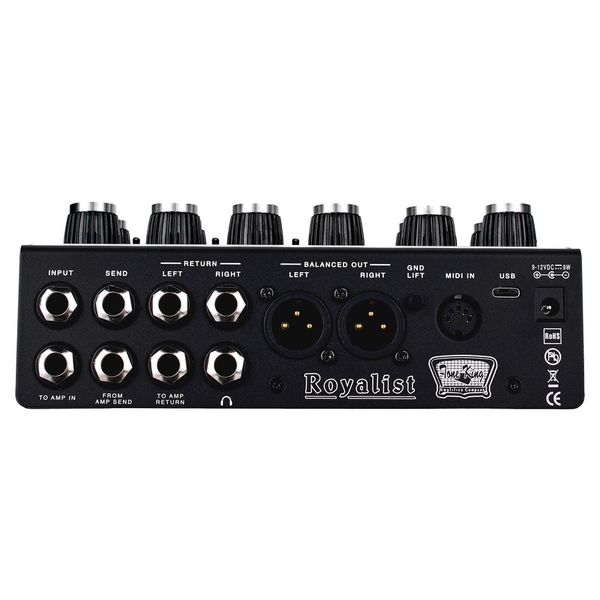
  • Ścieżka wejścia pętli efektów szeregowych
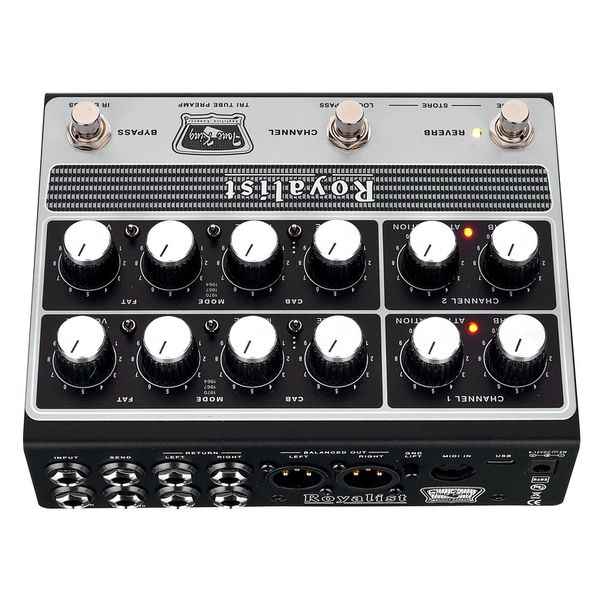
  • Wejście: wtyczka jack 6,3 mm
  • FX Send: wtyczka jack 6,3 mm
  • FX return left / right: 2 x 6,3 mm
  • Wyjście left / right balanced: 2 x XLR
  • Do wejścia wzmacniacza (to amp): wtyczka jack stereo 6,3 mm
  • Od wysyłania wzmacniacza: wtyczka jack stereo 6,3 mm
  • Do powrotu wzmacniacza: wtyczka jack stereo 6,3 mm
  • Wyjście na słuchawki: wtyczka jack stereo 6,3 mm
  • Wejście MIDI: 5-biegunowe DIN
  • USB C
  • Łącze zasilania sieciowego: gniazdo wtyku rurkowego 5,5 x 2,1 mm, biegun ujemny wewnątrz
  • Pobór mocy: 800 mA
  • Zasilanie za pomocą dołączonego zasilacza sieciowego 12 V DC
  • Wymiary (sz. x gł. x wy.): 183 x 145 x 70 mm
  • Waga: 0,9 kg
  • W zestawie: oprogramowanie Tone King Editor
  • Wyprodukowano w USA
  • Produkt dostępny od Luty 2026
  • Numer artykułu 633732
  • Jednostka sprzedaży 1 szt.
  • Design Stompbox
  • Tube(s) Yes
  • Amp Modeling Yes
  • Effects Yes
  • Headphone Output Yes
  • Direct Out Yes
  • MIDI Interface Yes
  • Integrated Expression Pedal No
  • Connections for Pedals or Switches No
  • Aux-Input No
  • Integrated Tuner No
  • USB-Port Yes
  • Drum-Computer No
  • Effect Types Preamp
Dostępny B-Stock od 2 499 zł
2 699 zł
Ceny z podatkiem VAT
Dostępny w magazynie
1

16 Oceny klientów

4.1 / 5

obsługa

właściwości

dźwięk

wykończenie

10 Opinie

a
lampowy head w formie pedału
areks 06.07.2026
Genialnie brzmiący pedał. Na nagraniu trudno odróżnić czy gramy na lampowym head czy na efekcie gitarowym. Ma świetny reverb z regulacją. Rewelacyjne symulacje kolumn gitarowych. Zakładasz słuchawki i czujesz jakbyś grał na lampowym wzmacniaczu i dobrej kolumnie. Symulacje kolumn brzmią świetnie.
obsługa
właściwości
dźwięk
wykończenie
1
0
Zgłoś nadużycie

Zgłoś nadużycie

google translate gb
Wystąpił błąd. Proszę spróbować później.
L
Good, but the Imperial Preamp remains my favorite
Lajbert 02.03.2026
It's a Tone King product, so it's obviously very high quality, carefully crafted, you can feel it with every touch.
It does almost exactly the same thing as the Imperial Preamp, only modelling different amps, and with some new switches, you have more options to shape the tone. It lacks tremolo, though the music you want to play with this probably doesn't require it anyway. It's versatile, the channels are different enough that if you combine with the voicing options + built-in IRs, you can really squeeze a lot of tone out of it.
My only real criticism is that it sounds too bright, sometimes even harsh. Even if you set the maximum high-cut from the software, it can still result in ear fatigue after relatively short playing.
It sounds very harsh through Adam Audio A7V speakers, but it's much better through my Laney LFR-212 cab with the right IR.
My favourite, the Imperial Preamp (I own both the combo amp and the preamp), sounds so insanely good right out of the box that I didn't even look at the software options for months after I got it. With this one, the first thing to do was to open the TK Editor to see what I can do about the hashness.
It's a great preamp that sounds better than any modeller and can make great tones, but I HIGHLY recommend an EQ pedal (my favourite is the Empress ParaEq MKII Deluxe) and some tinkering with the software.
However, the Imperial Preamp remains the king.
obsługa
właściwości
dźwięk
wykończenie
16
4
Zgłoś nadużycie

Zgłoś nadużycie

google translate gb
Wystąpił błąd. Proszę spróbować później.
M
A great overdrive for classic rock and more
MarekSi 08.11.2026
I heard lots of criticism about the unit being harsh and trebly. I bet most of the people who claimed it had never heard classic Marshalls before.
Plexis are trebly, fizzy and cut through the mix like a razor.
And no, this unit is not harsh, it just represents Marshall sound very well.

It’s also got more gain than I thought, but it’s still very touch sensitive. The new firmware adds tones of features (like new reverbs).

And as with real Marshalls you can get beautiful clean tones too. A strat plus Royalist will have you playing clean and slightly distorted tones for hours.

I tested it so far into fx return of my combo amp as this is how I plan to use it. I am yet to test it direct for recording, but knowing how Friedman IR X and TK Imperial preamps behaved I anticipate no bad surprises
obsługa
właściwości
dźwięk
wykończenie
2
0
Zgłoś nadużycie

Zgłoś nadużycie

google translate de
Wystąpił błąd. Proszę spróbować później.
D
Starker Preamp im Marshall-Stil
DBar8 27.07.2026
Ich habe sowohl den Tone King Imperial Preamp als auch den Royalist zuhause, konnte daher beide ausgiebig testen. Der Royalist ist ähnlich aufgebaut und kommt in der gewohnt hohen Qualität. Natürlich sind es komplett verschiedene Voicings, weil auch der Royalist ein ganz anderer Verstärker ist als der Imperial. Dazu hat der Royalist noch einen kleinen Makel des Imperials ausgebessert: Er merkt sich, wann und wo Reverb an war, auch nach dem Ausschalten. Unverständlich, warum der Imperial das nicht macht.

Was die eigentlichen Inhalte angeht: Die Voicings entsprechen, soweit ich mich erinnere, dem Royalist Verstärker, den ich einmal anspielen konnte. Dazu gehört aber auch, dass sie relativ "hart" sind. Das ist beim großen Verstärker auch so, und auch bei einigen älteren Marshall-Verstärkern. Insofern ist das kein Makel, sondern Teil des Designs. Muss man mögen, und mir gefällt das eigentlich sehr gut. Durch den EQ und die Software kann man hier ja auch eingreifen und das etwas zügeln, wenn es einem zu viel wird. Es macht den Sound auf jeden Fall sehr durchsetzungsfähig. Bass ist ein ähnliches Thema, auch hier ist relativ viel drin. Den kann man aber wirklich sehr einfach via EQ regeln - ich finde ihn nicht so überbordend überwältigend wie den beim Imperial. Ich mag aber persönlich eher höhenlastige, etwas bassärmere Gitarrensounds; im Live-Mix sowieso, aber auch einfach von meinen persönlichen Hörgewohnheiten.

Die Verzerrung ist fantastisch, der Reverb tut seinen Job (und lässt sich pro Kanal regeln, was ich sinnvoller finde als das zusätzliche Tremolo am Imperial), und das Routing ist genauso durchdacht wie beim Imperial. Insgesamt also ein fantastischer Preamp, der aber vom Voicing her gefallen muss. Das gilt für den Imperial aber auch genauso. Beide können etwas "sperrig" sein, weil sie eben nicht den üblichen "Deluxe Reverb" oder "Plexi" nachbilden, sondern eigene Interpretationen verschiedener Vorlagen darstellen.
obsługa
właściwości
dźwięk
wykończenie
3
0
Zgłoś nadużycie

Zgłoś nadużycie